Espargos | Aspargus

Estudos mostram que a adição de espargos à alimentação do cão tem inúmeros benefícios, independentemente deste fazer uma alimentação natural ou ração. 

Os espargos têm uma elevada quantidade de fibras que funciona como prebiotico, mediando os valores de insulina no sangue e acelerando a velocidade do transito gastrointestinal.

Vários estudos apontam também que ao reduzir o pico de glicémia (açúcar no sangue) este alimento actua na prevenção do cancro.
https://link.springer.com/article/10.1007/s13277-013-1464-x
https://www.ncbi.nlm.nih.gov/pubmed/8569244

A recomendação, para um cão adulto com mais de 10kg e saudável, ou com “apenas” excesso de peso, sem outras condições clínicas associadas, será garantir 20g de espargos na composição do prato de alimentação natural ou no caso da ração, retirar cerca de 20g da mesma e substituir pela mesma quantidade de espargos.

Caso o cão tenha menos de 10kg a quantidade de espargos deverá ser calculada em função do seu peso. Caso o cão já tenha alguma patologia presente por favor consulte um médico veterinário ou nutricionista canino antes de fazer esta alteração.


Studies show that adding asparagus to dog food has numerous benefits regardless of whether making a natural feed or kibble.

Asparagus has a high amount of fibers that functions as a prebiotic, mediating blood insulin values ​​and accelerating the rate of gastrointestinal transit.

Several studies also point out that by reducing peak blood sugar (glycemia) this food acts to prevent cancer.

https://link.springer.com/article/10.1007/s13277-013-1464-x

https://www.ncbi.nlm.nih.gov/pubmed/8569244

The recommendation, for an adult dog weighing more than 10kg and healthy, or “only” overweight, but with no other associated clinical conditions, is 20g of asparagus in the composition of the natural feeding dish or in the case of kibble, remove about 20g and replace with the same amount of asparagus.

If the dog has less than 10kg the amount of asparagus should be calculated according to its weight. If the dog already has some pathology present please talk to your vet or dog nutritionist before making this change.

Bolacha Maria | Maria Cookie

Como bons portugueses que somos, vemos no acto de dar comida (seja ela qual for) uma forma de mostrar amor. No entanto, é fundamental compreendermos que muitas vezes estamos a prejudicar seriamente a saúde do cão ao dar-lhe determinados alimentos.
Antes demais, devemos ter em atenção que se há cães obesos, salvo determinadas condições clínicas, a culpa é “nossa” somos nós que escolhemos e fornecemos a sua alimentação, tanto a nível de quantidade como de qualidade.
A obesidade é uma doença grave e preocupante, que tal como nos humanos, tem vindo a aumentar nos cães. O excesso de peso está associado a várias doenças crónicas, como a Diabetes Mellitus (que implica a injecção de insulina duas vezes por dia bem como um controlo sério da alimentação), cardiopatias (que implica novamente aumento de custos veterinários e medicação), problemas osteo-articulares (idem), dificuldades respiratórias e obviamente uma diminuição da qualidade de vida e uma morte precoce.

Este é o rotulo de uma embalagem de bolachas Maria, se virem a lista de ingredientes poderão perceber que nenhum dos ingredientes tem qualquer interesse nutricional para o cão. E tem uma quantidade de açúcar absolutamente criminosa.

Os cães não devem consumir açúcar de todo, está estudado que além de lhes retirar o faro, estragar os dentes e contribuir para o excesso de peso, é um enorme contribuidor para o aparecimento e desenvolvimento de tumores. 

Os cães gostam de comida mas gostam mais ainda de ter saúde, de não precisarem de ir ao veterinário ou de tomar medicação. 
Podemos sempre (e devemos) dar atenção, festas, passeios e brincadeiras! 


As good Portuguese, we see in the act of giving food (whatever it is) a way of showing love. However, it’s critical to realize that we are often seriously damaging owr dog’s health by giving him certain foods.

We must bear in mind that if there are obese dogs, unless certain clinical conditions, it’s “our” fault. We are the ones who choose and provide their food, both in quantity and quality.

Obesity is a serious and worrying disease, which as in humans, has been increasing in dogs. Overweight is associated with a number of chronic diseases, such as Diabetes Mellitus (which involves twice-daily insulin injection as well as serious food control), heart disease and osteo-articular disease (which again leads to increased veterinary costs and medication), breathing difficulties and obviously a decrease in the quality of life and an early death.

This is the label of a pack of Maria Cookies, if you check the ingredients list you may realize that none of the ingredients has any nutritional interest for a dog. And it has an absolutely criminal amount of sugar.

Dogs should not consume sugar at all, it is studied that besides removing the smell, ruining the teeth and contribute to being overweight, is a huge contributor to the appearance and development of tumors.

Dogs love food but still like being healthy, not having to go to the vet or taking medication. We can always (and should) play with them, go for a walk or training.

Perder peso | weight loss

Respondendo às várias mensagens que recebi a perguntar o que poderá ser feito para fazer o cão perder peso…
Existem algumas sugestões muito simples e generalistas que podem ser aplicadas a todos os cães. 
Adequações alimentares específicas podem e devem ser feitas a titulo individual em consulta.

1 – Aumentar a actividade física! Hoje em dia os cães passam muitas horas em casa fechados sem nada para fazer… Aproveite o bom tempo para levar o seu cão a fazer caminhadas! Se não tem tempo, inscreva-o numa boa creche (já demos algumas referências anteriormente) ou arranje um dogwalker.
ACREDITE QUE SAI MAIS BARATO DO QUE A CONTA DO MÉDICO VETERINÁRIO!

2 – Faça o seu cão “trabalhar” pela comida. Não a deite simplesmente na taça… Existem muitas alternativas!!

DOGS & FUN – TOYSOutro tipo de dispensador de comida são os Wobler, neste caso também da @kongcompany. A Nina Ottosson também tem uns óptimos.Mais uma vez são uma óptima forma para entreter os cães entretidos quando ficam sozinhos e que os estimulam física e mentalmente.#dog #dogs #cão #cães #happydog #canineenrichement #healthydog #comidacaseiraparacão #healthydogfood #dogtoys #cãesdeportugal #malinois #malinoisloreti #kong

Publicado por Ruff Dog em Quinta-feira, 31 de maio de 2018

3 – Pese a comida que lhe dá. Não use os copos medidores, nem muito menos “o olho”. Está estudado que tendencialmente damos mais comida ao cão do que aquilo que é recomendado, em média até 15% a mais!


Responding to the various messages I received asking what could be done to make the dog lose weight …There are some very simple and general suggestions that can be applied to all dogs.

Specific dietary requirements can and should be done individually for consultation.

1 – Increase physical activity! Nowadays dogs spend many hours at home with nothing to do … Enjoy the good weather to take your dog for walks! If you do not have the time, enroll him in a good daycare (we have given some references before) or get a dogwalker.BELIEVE YOU LEAVE CHEAPER THAN THE VETERINARY DOCTOR’S ACCOUNT!

2 – Have your dog “work” for food. Do not simply pour it into the bowl … There are many alternatives !!

DOGS & FUN – TOYSOutro tipo de dispensador de comida são os Wobler, neste caso também da @kongcompany. A Nina Ottosson também tem uns óptimos.Mais uma vez são uma óptima forma para entreter os cães entretidos quando ficam sozinhos e que os estimulam física e mentalmente.#dog #dogs #cão #cães #happydog #canineenrichement #healthydog #comidacaseiraparacão #healthydogfood #dogtoys #cãesdeportugal #malinois #malinoisloreti #kong

Publicado por Ruff Dog em Quinta-feira, 31 de maio de 2018

3 – Despite the food it gives you. Do not use the measuring cups, much less the “eye”. It has been studied that we tend to give more food to the dog than what is recommended, on average up to 15% more!

Obesidade no cão | Dog Obesity

O número de cães com excesso de peso e obesidade está a aumentar a uma enorme velocidade por todo o mundo e Portugal acompanha a tendência. Apesar de não haver dados definitivos, estima-se que mais de 40% dos cães têm excesso de peso ou obesidade.

A obesidade é a acumulação excessiva de gordura no organismo causada, normalmente, pelo desequilíbrio entre o consumo energético (muita quantidade de alimento ou com muitas calorias) e o gasto energético (falta de atividade física). As calorias ingeridas que não são gastas armazenam-se sob a forma de gordura, levando ao aumento de peso e a alterações na composição corporal do animal.

O excesso de peso e obesidade não é só um problema estético, mas sim o aparecimento de doenças cardiovasculares, diabetes (que no cão são sempre insulinodependentes), artrites e outras inflamações, cancro, dificuldade na locomoção, entre muitas outras, tudo isto leva a um aumento da comorbilidade e mortalidade no cão e uma enorme redução na qualidade de vida.

E lembre-se de uma coisa muito importante… “Pet obesity is a people problem, not a pet problem!”
Sabem porquê ? Porque o cão come aquilo que lhe damos. Ponto. Tanto em quantidade como em qualidade.
E o ocasional assalto à cozinha ou ao jantar não é desculpa. Não é isso que torna o cão obeso.


The number of overweight and obese dogs is increasing at a tremendous rate all over the world and Portugal is following the trend. Although there is no definitive data, it is estimated that more than 40% of dogs are overweight or obese.

Obesity is the excessive accumulation of fat in the body usually caused by the imbalance between energy consumption (too much food or too many calories) and energy expenditure (lack of physical activity). Ingested calories that are not spent store themselves in the form of fat, leading to weight gain and changes in the body composition of the animal.

Overweight and obesity is not only an aesthetic problem, but also the appearance of cardiovascular diseases, diabetes (which in dogs are always insulin-dependent), arthritis and other inflammations, cancer, difficulty in locomotion, among others. an increase in comorbidity and mortality in dogs and a huge reduction in quality of life.

And remember one very important thing … “Pet obesity is a people problem, not a pet problem!”Do you know why? Because the dog eats what we give him. Score. Both quantity and quality. The occasional kitchen or dinner robbery is no excuse. That’s not what makes a dog obese.

Falando de raças e fenótipos, os criadores seleccionam as características que melhor vendem. 
Ambos os cães da fotografia são Bulldogues Franceses, raça pura de dois criadores diferentes.
Estranhamente em Portugal o comum é vermos exemplares iguais aos da esquerda. Tipicamente animais com problemas respiratórios graves (entre outros).
Fica a dúvida: Porquê ?!?

“Two very different French Bulldogs. Yes, the dog on the right *is* purebred, showing what you can do in just a couple of generations if you actively select for a more moderate phenotype..

The dog on the left is Arnie, owned by Heather Hanna. The dog on the right was bred by Chantal van Kruining.

Which one do you find the most appealing?”


Speaking of breeds and phenotypes, breeders select the characteristics that best sell.Both dogs of the photograph are French Bulldogs, pure breed of two different breeders. Strangely in Portugal the common thing is to see exemplars equal to those of the left. Typically animals with severe respiratory problems (among others). The question remains: Why?!?

“Two very different French Bulldogs. Yes, the dog on the right *is* purebred, showing what you can do in just a couple of generations if you actively select for a more moderate phenotype..

The dog on the left is Arnie, owned by Heather Hanna. The dog on the right was bred by Chantal van Kruining.

Which one do you find the most appealing?”


Massagem Cardíaca | CPR

CPR – Cardiopulmonary Resuscitation
Em português conhecido como massagem cardíaca.
Sabe fazer ?
Pode ajudar a salvar uma vida!

1. Encontre uma superfície lisa e deite o cão sobre o seu lado direito.
2. Coloque a palma das suas mãos nas costelas do cão sobre o seu coração.
(cães pequenos, cachorros e braquicefálicos têm técnicas diferentes para esta massagem, peça ajuda ao seu médico veterinário)
3. Pressione até 1/3 a 1/4 do corpo, 100 a 120 vezes por minuto (é muito cansativo! tente pedir ajuda!!)
4. A cada 30 compressões, feche bem a boca do cão e sopre 2 vezes pelo nariz.
5. Repita os passos 3 e 4 até o cão responder ou chegar a um médico veterinário.

Leve SEMPRE o cão ao médico veterinário após uma situação extrema como esta, mesmo que o cão pareça “bem”.


CPR – Cardiopulmonary Resuscitation

Knowshow to do it? It can help save a life!

1. Find a smooth surface and place the dog on its right side.

2. Place the palm of your hands on the dog’s ribs over your heart. (small dogs, dogs and brachycephalic have different techniques for this massage, ask your veterinarian for help)

3. Press up to 1/3 to 1/4 of the body, 100 to 120 times a minute (it’s very tiring! Try asking for help !!)

4. With every 30 compressions, close the dog’s mouth thoroughly and blow 2 times through the nose.

5. Repeat steps 3 and 4 until the dog responds or reaches a veterinarian.

ALWAYS take the dog to the veterinarian after an extreme situation like this, even if the dog “looks well”.

Carpal Pad

Nas patas da frente dos nossos cães, existe a almofada carpal (carpal pad), está ao nível do “punho” do cão, não tem nenhuma unha associada, e serve para ajudar o cão a equilibrar-se em terrenos/áreas acidentadas, escorregadias, ingremes, etc. E para “travagens” mais bruscas.
Por vezes esta almofada sofre uma lesão, quando isto acontece geralmente o cão mostra alguns sinais de desconforto como levantar a pata quando está em pé, a claudicação durante a marcha, ou lambendo quando está deitado. 
As causas mais comuns para esta lesão são os cortes, as queimaduras (alcatrão quente, quimicos, gelo/neve…) e as praganas. Outras causas, apesar de menos comuns, são as alergias, as algumas doenças auto-imunes e as deficiencias nutricionais.
O que fazer caso detecte uma lesão por corte ou pragana ?
1. Inspeccione a almofada a procura de ferimentos,
2. Lave a pata com água corrente e remova eventuais detritos
3. Desinfecte a pata com um anti-septico
4. Se houver sangramento, aplique com uma compressa pressão durante 10 minutos para o sangramento parar (resista à tentação de espreitar a cada dois minutos para ver se já parou, dê tempo ao organismo para actuar)
5. Pode utilizar cremes cicatrizantes como o be-phantene mas evite que o cão lamba até o creme ser absorvido.

Consulte um médico veterinário para confirmar que a causa da lesão ficou resolvida e eventualmente ligar a zona se for preciso. Não recomendo que faça o penso sozinho a menos que tenha algum curso de primeiros socorros, porque a pressão a mais pode causar problemas graves. Caso seja feito penso, ele deve ser aberto e refeito diáriamente.
Caso a lesão seja por queimadura, lavar imediatamente com água corrente e abundante e levar ao médico veterinário. 


On the front paws of our dogs, there is the carpal pad, it is at the level of the dog’s “fist”, it has no associated nail, and serves to help the dog balance in uneven, slippery terrain / areas , income, etc. And for more “braking”.Sometimes this cushion suffers an injury, when this happens the dog usually shows some signs of discomfort such as raising the paw when standing, claudication during gait, or licking when lying down.The most common causes for this injury are cuts, burns (hot tar, chemicals, ice / snow …) and the corns. Other causes, though less common, are allergies, some autoimmune diseases, and nutritional deficiencies.

What to do if you notice a cut or chafer injury?

1. Inspect the cushion for personal injury,

2. Wash the foot with running water and remove any debris

3. Disinfect the paw with an antiseptic

4. If there is bleeding, apply with a compress pressure for 10 minutes for the bleeding to stop (resist the temptation to peek every two minutes to see if it has stopped, give the body time to act)

5. You can use healing creams like be-phantene but prevent the dog lick until the cream is absorbed.

Consult a veterinarian to confirm that the cause of the injury has been resolved and, if necessary, to switch on the area. I do not recommend that you do the dressing yourself unless you have some first aid course because too much pressure can cause serious problems. If it is done, it should be opened and redone daily.If the injury is by burning, wash immediately with plenty of running water and take it to the veterinarian

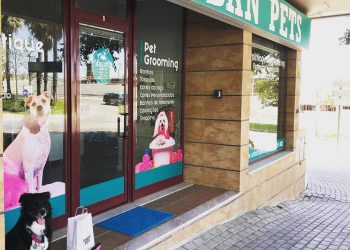
Urban Pets

A manutenção de uma pele e pelo saudável é importante para a saúde e bem estar do cão.
A kikoia hoje foi visitar a tia @iolanda_urban_pets à @urbanpets.pt para um banho e tratamento de pelo como deve ser.
Ao contrário daquilo que é costume em dias de banho saiu bem disposta e a abanar o rabo.
(Até porque recebeu um brinquedo de presente de bom comportamento 😂)
RECOMENDAMOS!!


Maintaining a healthy fur and skin is important for the health and well being of the dog. Today, Kikoia went visit aunt @iolanda_urban_pets @ urbanpets.pt for a shower and hair treatment as it should be.

Contrary to what is normal on bathing days, in the end she was very willingly and wagging her tail.(Even because she received a gift toy of good behavior 😂)

WE RECOMMEND !!

Dentição Canina | Canine dentition

Os cachorros vêm com dentes de leite que algures caem (e desaparecem!) e surgem os dentes definitivos. Muitas vezes isto é um fenómeno que passa despercebido há maioria dos donos, noutros casos é motivo de preocupação demasiada.

A Dra. Ana Margarida Santos, directora clínica da Clinica Veterinária João XXI de Algés, esclarece-nos como tudo acontece.

“Os dentes são extraordinariamente necessários e úteis. Servem para mastigar a comida e transformá-la num bolo alimentar que permite ao tubo digestivo fazer o seu trabalho de aproveitar a energia dos alimentos pelo corpo.

Ao longo da evolução a dentição sofreu muitas alterações. Os vertebrados mais antigos como peixes e répteis ainda exibem hoje em dia as dentições mais simples: têm os dentes todos iguais e vão caindo e crescendo ao longo da vida. Nos mamíferos já há dentes mais especializados que se adequam uns aos outros dentro da boca para funcionar como uma máquina de precisão.

Os incisivos, dentes da frente, servem para cortar, por isso os coelhos têm aqueles grandes dentões da frente que lhes permitem cortar a erva. Os molares, os dentes mais largos que ficam atrás, servem para moer, amassar bem todos os alimentos mais ou menos rijos. Os caninos, que são os dentes maiores dos vampiros, servem para rasgar, e são espencialmente desenvolvidos nos carnívoros que têm que caçar as suas presas.

As várias espécies de mamíferos adaptaram-se de diferentes formas para conseguir utilizar os dentes ao longo das suas vidas. Os elefantes por exemplo, que desgastam muito os dentes ao ingerir e mastigar vegetais muito fibrosos, trocam os seus molares seis vezes ao longo da vida. Vão desgastando, caindo e sendo substituidos como a lagarta de um tanque. Os pequenos roedores em vez de trocar de dentes têm dentes de crescimento permanente que vão repondo o dente à medida que se gasta.

Os cães, bem como os gatos e até os humanos, têm uma dentição transitória que também se chama “de leite” ou decídua antes da dentição permanente ou definitiva. Tal acontece porque as mandíbulas dos jovens são demasiado pequenas para acomodar os dentes permanentes mas há necessidade de dentes numa fase ainda de crescimento para poderem comer alimentos sólidos. Os dentes de leite também são importantes para manter o espaço na boca para os dentes definitivos e para servir de guia para a erupção destes.

Quando o cachorro nasce não tem dentes até às 2 semanas. Os primeiros dentes a nascer são os incisivos, que errompem entre as 2 e as 4 semanas de vida. Há 6 superiores e 6 inferiores. Entre as 3-6 semanas aparecem também os molares. São 3 de cada lado em cima e em baixo. Os últimos a aparecer são os caninos que normalmente deverão ser visíveis às 8 semanas. A dentição de leite é composta por 28 dentes.

Entre as 12-16 semanas começam a irromper os dentes definitivos e os dentes de leite caem. Este processo termina por volta dos 6 meses e até aos 8 meses toda a dentição definitiva deve estar completamente desenvolvida e os dentes de leite devem ter caído. A dentição permanente é composta por 42 dentes: 6 incisivos superiores, 6 inferiores; 4 pré-molares superiores e inferiores de cada lado, 2 molares superiores de cada lado e 3 molares inferiores de cada lado. E claro os 4 grandes caninos, 2 em cima e 2 em baixo. 

Durante este período da mudança de dentição é normal que os cachorros tenham mais necessidade de roer e devem ser proporcionadas formas seguras e desejáveis como brinquedos apropriados para evitar estragos nos chinelos e pernas da mesa…

Este processo normalmente decorre sem complicações na maioria dos cachorros, mas podem surgir alguns problemas que necessitam cuidados médicos. Ocasionalmente surgem fraturas dos dentes de leite que devem ser removidos para evitar abcessos da raiz e prejudicar os dentes definitivos.

Mais frequentemente surge persistência dos dentes de leite que podem não cair até depois dos 6 meses. As raças miniatura como Yorkshire, Chihuahua e Bichon parecem ser particularmente afetadas e muitas vezes é necessária a remoção com anestesia geral para não prejudicar o crescimento dos dentes permanentes e evitar danos na dentição definitiva.”


The dogs come with milk teeth that somehow fall (and disappear!) and the definitive teeth appear. Often this is a phenomenon that goes unnoticed by most owners, in other cases it is cause for concern too much.

Dr. Ana Margarida Santos, clinical director of the Veterinary Clinic João XXI de Algés, clarifies how everything happens.

“Teeth are extraordinarily necessary and useful. They serve to chew the food and transform it into a food cake that allows the digestive tract to do its job of harnessing the energy of food through the body.

Throughout the evolution the dentition has undergone many changes. Older vertebrates such as fish and reptiles still exhibit the simplest dentitions: they have all the same teeth and they are falling and growing throughout life. In mammals there are already more specialized teeth that fit each other inside the mouth to function as a precision machine.

The incisors, front teeth, serve to cut, so the rabbits have those large front teeth that allow them to cut the grass. The molars, the wider teeth that are behind, serve to grind, knead well all the more or less hard foods. Canines, which are the largest teeth of vampires, serve to tear, and are spiritually developed in the carnivores that have to hunt their prey.

The various species of mammals have adapted in different ways to be able to use their teeth throughout their lives. Elephants, for example, who wear their teeth a lot when ingested and chew on very fibrous vegetables, swap their molars six times throughout their lives. They are wearing, falling and being replaced like the caterpillar of a tank. Small rodents instead of changing teeth have permanent growth teeth that replenish the tooth as it spends.

Dogs, as well as cats and even humans, have a transient dentition that is also called “milk” or deciduous before permanent or definitive dentition. This is because the jaws of the young are too small to accommodate the permanent teeth but there is a need for teeth in a still growing stage to be able to eat solid foods. Milk teeth are also important to keep the space in the mouth for the definitive teeth and to serve as a guide for the eruption of these.

When the dog is born it has no teeth until 2 weeks. The first teeth to be born are the incisors, which erupt between 2 and 4 weeks of age. There are 6 upper and 6 lower. Between the 3-6 weeks molars also appear. They are 3 on each side on top and bottom. The last to appear are the canines that normally should be visible at 8 weeks. The milk dentition is composed of 28 teeth.Between the 12-16 weeks the definitive teeth erupt and the milk teeth fall. This process ends at about 6 months and up to 8 months the entire permanent dentition must be fully developed and the milk teeth must have fallen. The permanent dentition consists of 42 teeth: 6 upper incisors, 6 lower; 4 upper and lower premolars on each side, 2 upper molars on each side and 3 lower molars on each side. And of course the 4 big canines, 2 on top and 2 on bottom.

During this period of change of dentition it is normal for dogs to have more need to gnaw and safe and desirable forms should be provided as appropriate toys to avoid havoc on table slippers and legs …

This process usually runs smoothly in most dogs, but there may be some problems that need medical attention. Occasionally there are fractures of milk teeth that must be removed to avoid root abscesses and damage the definitive teeth.

More often, persistence of milk teeth which may not fall until after 6 months. Miniature breeds such as Yorkshire, Chihuahua and Bichon appear to be particularly affected and often need removal with general anesthesia so as not to impair the growth of permanent teeth and prevent damage to the final dentition.

Para marcação de consulta | To book an appointment
www.clinicaveterinaria.com.pt/